Skip to case study
Evelyna Bellamy
Auto · Daylight
Time of day

Following your local clock · Daylight

Warm ivory · charcoal · open sky

Local time, no location access. Choose a stop to keep that atmosphere.

An interactive narrative atlas

Narratologium

Life becomes a story.
The telling changes what we see.

An interactive platform for exploring narrative, memory, perspective, and the structures that shape meaning.

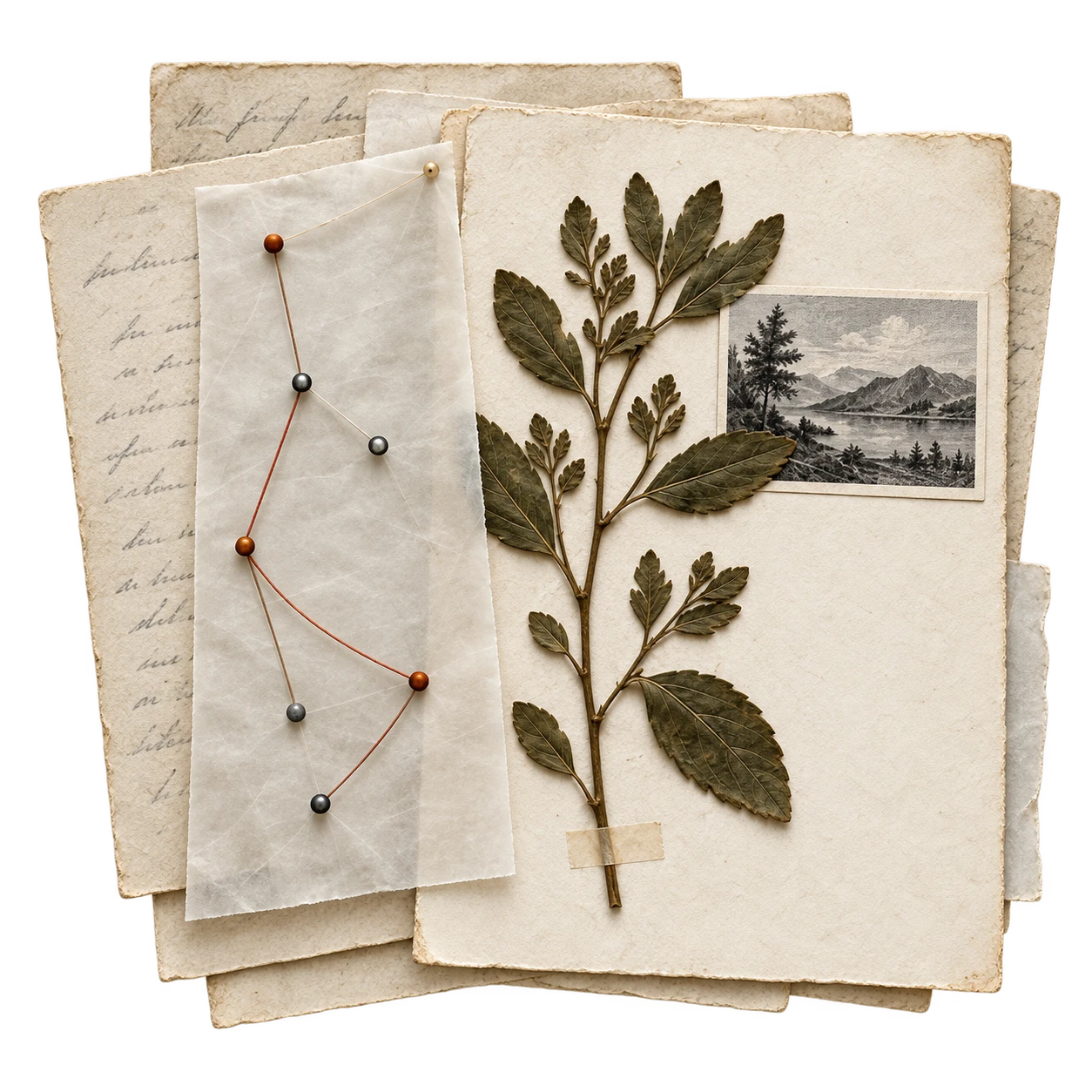
Illustrative pressed botanical stem, landscape fragment and connected vellum layered over paper.A life,
held in
fragments.
RecordPerspectiveConnection
Botanical folio · a symbolic composition, not archival evidence.

01 / The question

Make the connections visible.
Leave room for another reading.

A story is more than a sequence of events. Who tells it, where it begins, and what it leaves outside the frame all shape what we understand.

The design challenge is to let people explore those choices without making an interpretation look like an established fact.

02 / The experience

One story.
More than one reading.

Change the lens. Keep the source in view. This working reading table is shared with the platform, rather than a screenshot of it.

A story on the tableMary Shelley / 1831 text

Frankenstein

Three voices. A story within a story.

Choose a way to read
Follow a voice
Narrator, from outer to inner frame

Creature selected. Read the passage.

Frankenstein; or, The Modern PrometheusChapter 10

Creature / The voice inside Victor’s account

A plea to be heard

Remember that I am thy creature; I ought to be thy Adam, but I am rather the fallen angel, whom thou drivest from joy for no misdeed.

— Creature, speaking to Victor Frankenstein

Read Chapter 10 in the 1831 text ↗
Source & editorial note Mary Shelley · Frankenstein · 1831

Passages are transcribed from Project Gutenberg eBook #84, using the 1831 text and chapter numbering. Walton: Letter 2; Victor: Chapter 5; Creature: Chapter 10. Whitespace is normalized. The original text is public domain in the United States.

Margin notes, questions, and connections are editorial readings, not quotations or measured findings. These are passages from different moments in the novel, selected to explore its nested voices.

Read the source text ↗Visit the source ledger →

A bounded study of three narrative voices in Frankenstein. Source passages and editorial interpretation are presented separately.

Continue into the full platform

03 / The system

The source
stays attached.

A warm surface is an invitation. Clear distinctions between the text, its interpretation, and its source make the invitation useful.

Frankenstein / Chapter 5

I had desired it with an ardour that far exceeded moderation; but now that I had finished, the beauty of the dream vanished, and breathless horror and disgust filled my heart.
Mary Shelley · Project Gutenberg eBook 84
Read the passage in context ↗
01

Story

Editorial serif

The narrative, in the author’s words, kept in context.

02

Interpretation

Clear annotation

A reading of the text, visibly distinct from the text itself.

03

Evidence

Inspectable source

An edition, a location, and a route back to the material.

A visual decision

Material, not decoration.

The pressed plant suggests something lived and preserved. Vellum makes interpretation feel like a layer over a record, not a replacement for it. The artwork introduces the idea; the interface carries the work.

An interaction decision

One change at a time.

Select a voice, follow its relationship, then inspect the source. A stable reading area makes the effect of each choice visible without asking the visitor to learn a dashboard first.

04 / The making

An inviting surface.
A substantial atlas underneath.

The reading table is an entrance into a wider collection of tools for structure, framing, memory, and creative practice.

Built as a system

Content → interaction → context

Typed narrative records separate narrator, audience, and frame. React keeps the selected voice and reading mode together; semantic HTML keeps the same exploration available to keyboard and touch users.

What this demonstrates

This case study documents an interface and its design choices. It does not claim measured learning outcomes or validate every analysis in the wider platform. The reading notes are editorial, not automated findings.
Inspect the Source Ledger

Different lives. Shared threads.

What we preserve.
What we make of it.

Explore Narratologium